

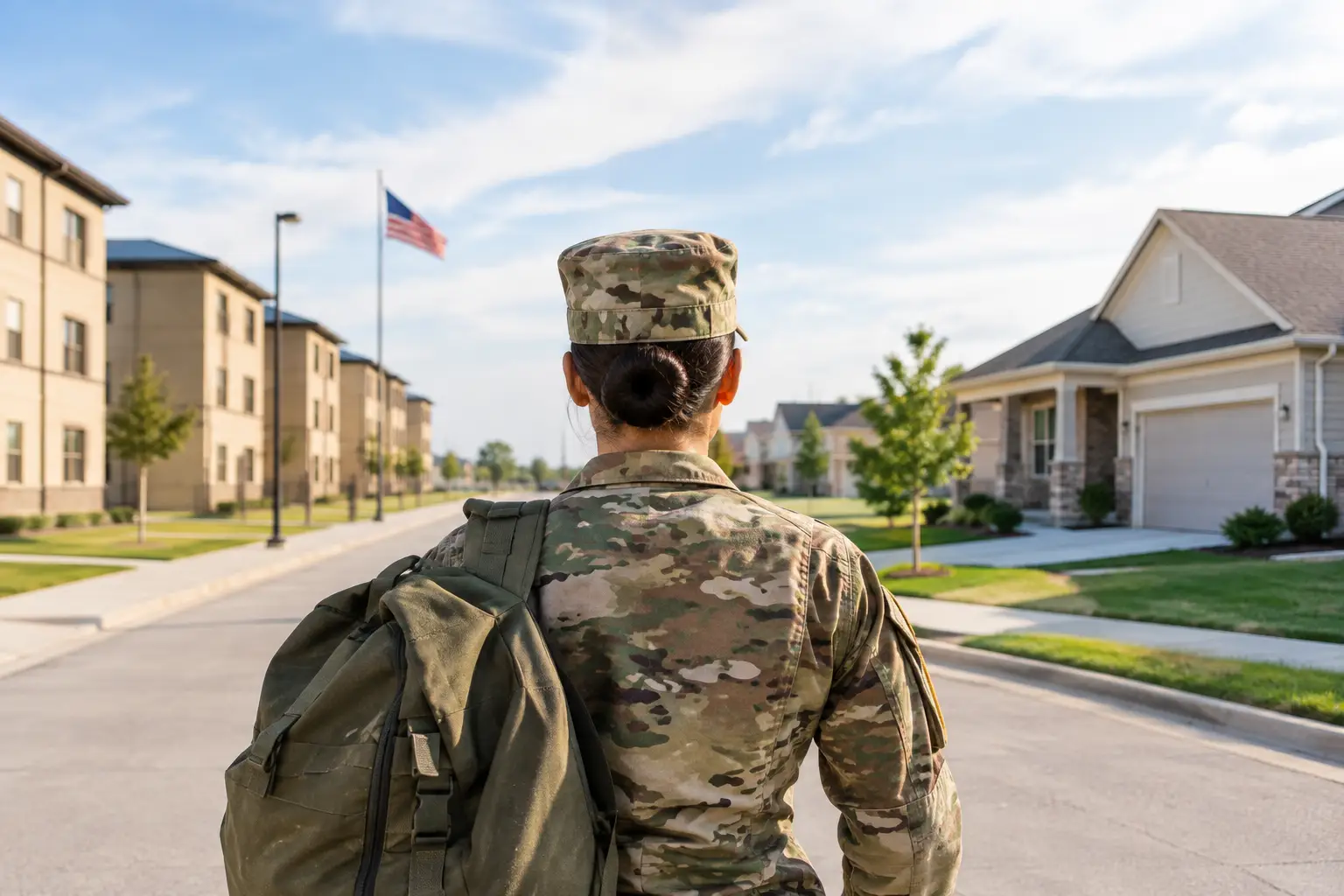
A PCS to Joint Base San Antonio can make the base versus civilian housing decision feel urgent before your household goods have even arrived. One family may need a short commute and easy access to installation services. Another may need a specific school boundary, room for two dogs, or a home office for a working spouse. There is no universal right answer, especially across a joint installation as spread out as JBSA.
Your best choice comes from matching housing to your orders, family needs, daily schedule, and realistic move timeline. Whether you are headed to Lackland AFB, Randolph AFB, or Fort Sam Houston, start early and keep more than one option open.
Base Versus Civilian Housing at JBSA
On-base housing can offer a familiar military-community setting, while civilian housing gives you more control over neighborhood, home style, and location. Both choices can work well. The practical differences are usually wait time, commute, school preferences, out-of-pocket costs, and the kind of support your family needs during the first months of a move.
JBSA is not one compact location. A home that is convenient for Fort Sam Houston may be a difficult daily drive to Randolph, and a neighborhood near Lackland may not make sense for someone assigned elsewhere. Before touring homes or joining a waitlist, confirm your primary duty location, expected reporting schedule, and how often you will need to travel between installations.
What on-base housing may offer
For many incoming families, base housing is appealing because it reduces a few moving parts at once. You may be close to gates, commissary and exchange services, military medical resources, youth programs, and other families who understand deployment schedules, TDYs, and PCS disruptions.
In many cases, utilities and maintenance arrangements are more straightforward than in a civilian rental, though residents should still read their lease and community policies closely. Housing availability, home size, pet rules, neighborhood amenities, and utility terms can vary by location and by the privatized housing community managing the property.
The trade-off is that you may have less choice in the exact home, neighborhood, layout, or move-in date. Waitlists can change with rank, family size, bedroom eligibility, and turnover. A family arriving during a busy PCS season may need temporary lodging or a civilian rental plan while waiting for an offered home.
On-base living can also make the installation feel like your whole world. That can be a comfort during a first assignment, but some households eventually want more distance between work and home. If your service member has irregular hours, however, being near the duty station may matter more than having a larger yard or a particular ZIP code.
What civilian housing may offer
Choosing off base opens up far more of San Antonio and the surrounding communities. Renters and buyers can compare neighborhoods based on commute, budget, school preferences, parks, restaurants, healthcare access, family support, and the kind of home they want. This flexibility is especially valuable for larger families, households with pets, or spouses who need to be near a civilian employer or campus.
Civilian housing can also let you select a location that works for the whole family rather than just the service member’s duty section. For example, a household assigned to Fort Sam Houston may prioritize access to central San Antonio, while a Randolph family may focus on the east or northeast side of the metro area. Lackland households often weigh gate access against the amenities and school options available in nearby communities.
More choice also means more research. Rental applications, deposits, utility setup, parking arrangements, lawn care, and repair expectations may all be separate responsibilities. Ask what is included in rent, whether pets carry monthly fees, how maintenance requests are handled, and what happens if orders require an early move. A military clause should be understood before signing, not after a change in orders.
Start With the Factors That Affect Daily Life
The housing decision is less about whether one option is “better” and more about which trade-offs your household can comfortably manage. Put the following questions at the center of your search.
1. Can your timeline absorb a waitlist?
If you need a home immediately after arrival, do not assume on-base housing will be available on your preferred date. Contact the official installation housing office and the applicable housing community early to understand current availability, eligibility, application requirements, and temporary options.
A civilian rental may be available sooner, but a quick decision can create problems if you have not tested the commute at the times your service member will actually travel. Keep copies of orders, identification, income documentation, pet records, and rental references ready for either path.
2. What does the commute look like at duty hours?
A map can make a drive appear simple. Gate traffic, construction, school drop-off, weather, and shift changes can make it very different in real life. Test the route during morning and afternoon peak periods when possible. Also consider where the non-military spouse works, where children attend school or childcare, and where you will shop and attend appointments.
For dual-working households, a centrally located civilian home may save more time overall than living nearest to the installation. For a service member on early-reporting schedules or frequent on-call duties, on-base proximity may be worth giving up some space.
3. How will schools and childcare fit the plan?
School assignment is tied to residence, and boundaries, enrollment procedures, transportation rules, and program availability should be verified directly with the appropriate school district. Do not choose a home based only on an online school listing or a neighbor’s experience from several years ago.
Childcare deserves the same early attention. Military child development programs and civilian providers may have separate availability, waitlists, hours, and transportation considerations. A home that looks perfect on a weekend tour may become less practical if it adds an hour of driving between school, childcare, work, and base.
4. Will the numbers work beyond the monthly rent?
Basic Allowance for Housing is an important starting point, not always the final cost. Compare rent or mortgage payments with utilities, renters or homeowners insurance, deposits, pet fees, commuting fuel, tolls, lawn care, and potential repair responsibilities. Ask about average utility costs for a civilian property, particularly during the San Antonio summer.
On-base housing may simplify some monthly expenses, but families should still understand what is and is not covered. Civilian housing may cost more than BAH in a preferred neighborhood, or it may leave room in the budget for savings. Either outcome can be reasonable if it reflects a deliberate plan.
A Practical Way to Make the Decision
Give yourself a short comparison process rather than trying to solve every housing question in one day. First, apply for on-base housing if it is a serious possibility and confirm what the waitlist means for your arrival date. At the same time, identify a few civilian neighborhoods that fit your duty location and household priorities.
Then compare actual options, not just general impressions. Put each available home next to the same criteria: total monthly cost, commute at duty hours, bedrooms and storage, pet rules, school and childcare logistics, lease flexibility, parking, and access to the services your family uses most. A smaller home with a 10-minute commute may beat a larger home that turns every weekday into a transportation problem.
If you are purchasing, be cautious about treating a PCS assignment as a guarantee of a long stay. Consider how long you expect to remain in the area, whether the payment fits comfortably, and what a future sale or rental could require. A local real estate professional who understands military timelines can help you ask the right questions, but the final decision should fit your own orders and financial picture.
When a Temporary Plan Is the Smart Plan
Some families need to arrive first and decide second. That is not a failure to plan. Temporary lodging, a short-term rental, or staying with family briefly can give you time to see neighborhoods, complete in-processing, and learn where your daily life will actually happen.
This approach can be especially helpful when a spouse is job hunting, a child has specialized school needs, a pet has rental restrictions, or the on-base waitlist is close but uncertain. It can cost more in the short term, so build that possibility into your PCS budget if you can.
JBSA On Demand is here to help you organize local housing, school, healthcare, childcare, and newcomer resources as you settle into the San Antonio area with confidence. The right home is the one that gives your household a workable routine, reliable support, and enough breathing room to make San Antonio feel like home.


